close

AHW Was Built to Respond to the Emotional Needs of Foster Youth

A Home Within was created to ensure that young people who have experienced foster care receive long-term, relationship-based therapy from clinicians who truly see and understand them. Yet national data reveals a deep structural challenge: a 2015 report showed that 86% of licensed psychologists in the United States were white, and a 2019 study found that 70% of social workers and 88% of mental health counselors were also white. This means that most youth—particularly youth of color—face significant barriers to accessing care from therapists who share their cultural identities and lived experiences.

At the same time, the lived experience of foster care disproportionately impacts Black, Indigenous, and other youth of color, who are overrepresented in the child welfare system and often under-resourced in the supports available to them. Across A Home Within, our clients have consistently asked for more therapists who can provide culturally aligned, culturally affirming care—providers who understand their communities, their histories, and the resilience they carry.

To meet this need, A Home Within is committed to increasing the representation of mental health providers of color across clinical disciplines, ensuring that youth and families from diverse backgrounds have access to providers who deliver culturally responsive, trauma-informed treatment.

Building Practice in Community (BPIC) is one way we are building this future—together.

Adanna Eke, LCSW, PMH-C
Director of BPIC

About BPIC:

Building Practice in Community (BPIC) is A Home Within’s signature professional development initiative, rooted in our tradition of long-term, relationship-based care. BPIC fosters a sense of belonging for both clients and clinicians while strengthening the clinical interventions provided to current and former foster youth—especially those from communities that have been historically marginalized and overrepresented in foster care.

BPIC responds directly to what our clients tell us they need:
more providers from their own communities—clinicians who understand their cultural, racial, and social contexts and can offer affirming, responsive care.

To meet this need, BPIC actively supports the retention, success, and advancement of therapists from underrepresented backgrounds, offering a network of mentorship, community, and professional development. This ensures that clinicians have the ongoing support required to deliver high-quality, culturally attuned mental health care while building sustainable careers.

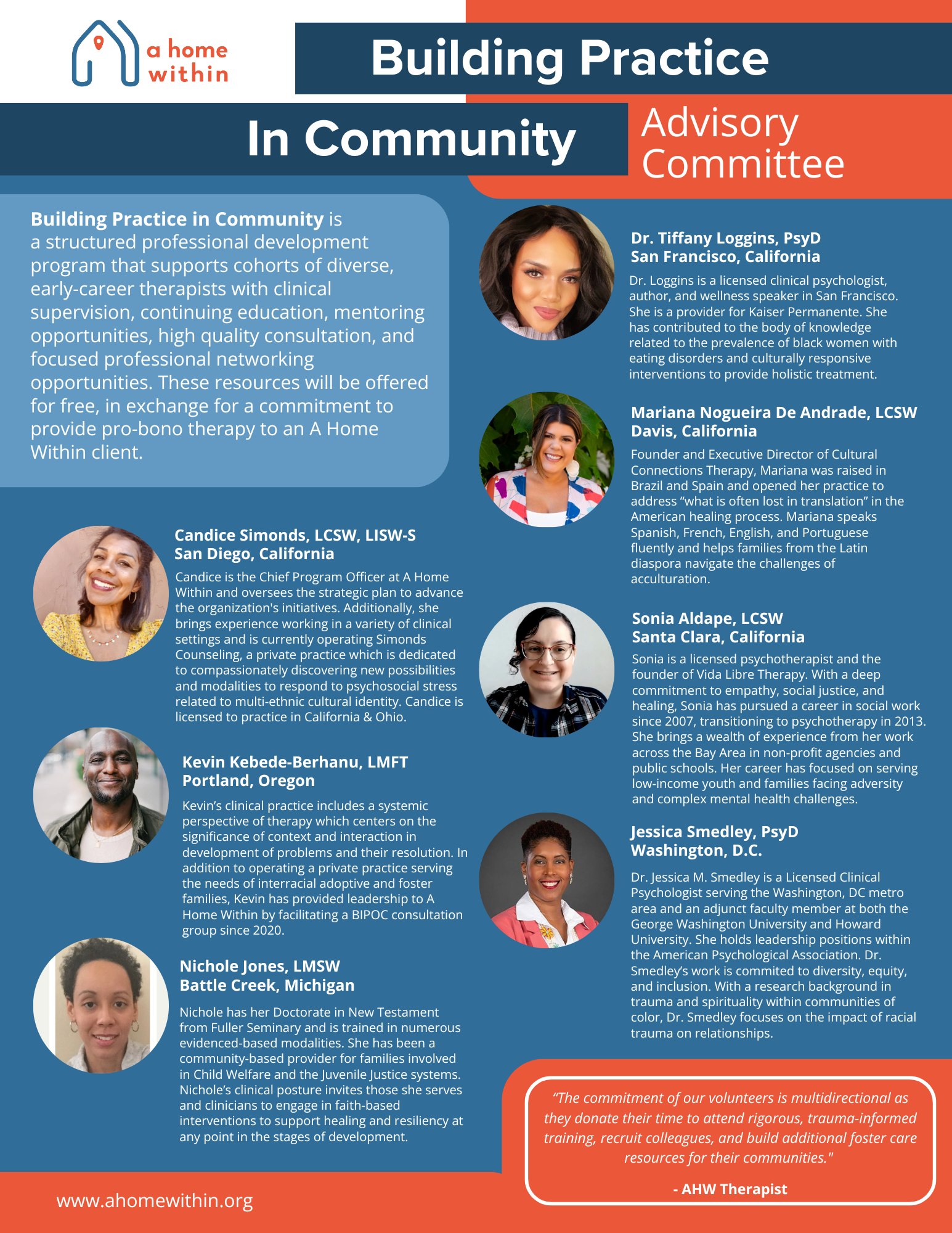
Check out our BPIC Advisory Committee Flyer!

What BPIC Offers:

In exchange for participants’ commitment to providing long-term, pro bono therapy to a current or former foster youth through A Home Within, BPIC provides:

  • Continuing education credits
  • Assistance in obtaining licensure
  • Peer resources and mentorship
  • Specialized clinical training
  • Access to prestigious clinical certifications
  • Support in establishing or strengthening a private practice

By fostering mentorship, professional growth, and a strong community of practice, BPIC ensures that clinicians receive the ongoing support needed to provide culturally affirming, trauma-informed care while advancing their careers.

At this point in my career, I am speaking up because it has to be about our humanity and love. Apathy can no longer be an option in response to all the trauma that youth in foster care experience.

– AHW Therapist

Current Trainings for BPIC Members

BPIC members have access to a growing slate of trainings and learning pathways designed to deepen skills and expand culturally responsive practice, including:

  • EMDR Training Pathway: Register for EMDR training opportunities designed to support trauma-focused work with youth who have experienced foster care.
  • Psychodynamic Beginnings for BIPOC Therapists: A foundation track centering the experiences, wisdom, and clinical voices of BIPOC therapists exploring or deepening psychodynamic practice.
  • Cue-Centered Therapy (CCT): Specialized training in Cue-Centered Therapy to support youth navigating complex trauma and chronic stress.
  • Clinical Supervision & Leadership Development: Opportunities to grow as a supervisor, mentor, or consultation group leader while strengthening culturally affirming and trauma-informed supervision skills.

(Availability may vary over time; please check the registration links or BPIC newsletter for current offerings.)

Upcoming BPIC Trainings

Introduction to Psychodynamic Theory and Practice
As part of an 8-week clinical series, clinicians will learn how to integrate and apply psychodynamic principles into their psychotherapy work with individuals with lived experience in the foster care system.
Date: 1/23/25
Time: 9:00am – 12:00pm
Click HERE to sign up for this amazing 8 week series!

Dr. Bree McDaniel

At a Glance

BPIC provides mentorship and professional development for therapists from underrepresented backgrounds
Annually, 30-40 early career therapists enroll and graduate
Enrolled therapists are placed in cohorts of 10